Butter Yellow Is Everywhere: What It Actually Is and 5 Ways to Wear It
By Hilario Herrera · Last updated ·Research-based guide · Some links are paid links (disclosure).
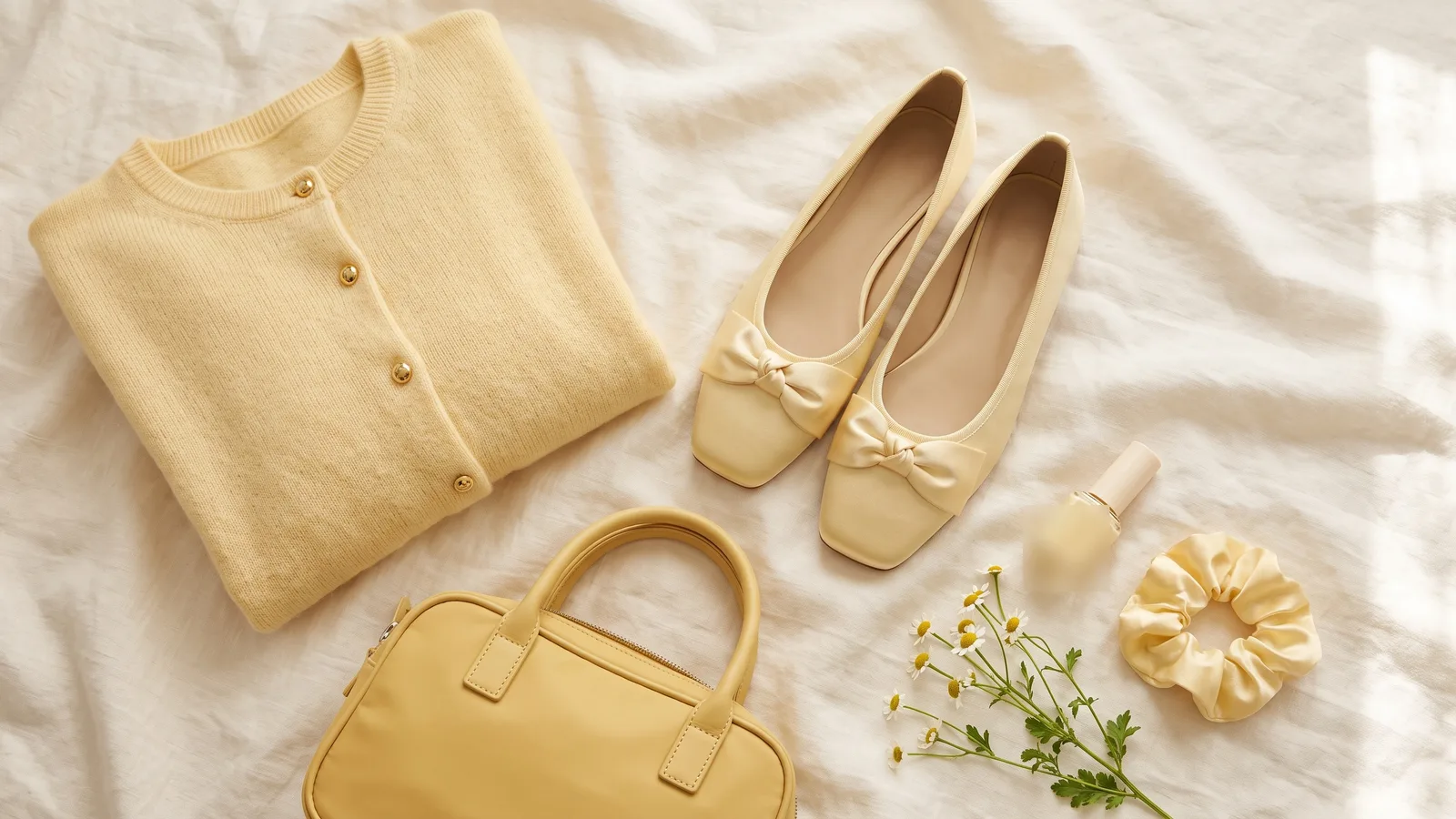
Okay, So What Is “Butter Yellow,” Really?
If your first thought when you hear “yellow outfit” is a highlighter-bright dress or a mustard cardigan your aunt loved in 2014, butter yellow is neither of those, and that’s the whole point.
Butter yellow sits in a very specific, very narrow lane: low-saturation, warm, and softened with enough cream or beige in the base that it reads more like buttercream frosting or corn silk than a lemon drop. It’s muted in a way that pure yellow isn’t — the color equivalent of turning the volume down two notches so it stops shouting and starts whispering.
That’s also why it’s suddenly on every “trending searches” list instead of just showing up in spring collections and disappearing. “Premium butter yellow” specifically has been climbing as a search term, and our read is that the “premium” part is doing real work — it’s likely shoppers’ way of flagging the good, creamy version rather than the cheap, neon-adjacent version that misses the whole vibe.
Butter Yellow vs. Lemon vs. Mustard: The Real Differences
These three get lumped together constantly, but they’re not interchangeable, and picking the wrong one is the fastest way to feel like you’re wearing a costume instead of an outfit.
- Lemon yellow is bright, clean, and high-saturation — it’s the “look at me” yellow. Zero cream in the base, all citrus punch.
- Mustard yellow goes the opposite direction: deeper, browner, and edged with ochre or olive. It reads earthy and autumnal, sometimes almost khaki-adjacent.
- Butter yellow lands in the middle and pulls the saturation way down. Think vanilla custard with a hint of gold, not a crayon. The low saturation is what makes it wearable as a near-neutral instead of a statement color you have to “style around.”
The distinction shows up in nails too: a butter-yellow gel polish is meant to look soft and creamy on the nail, unlike a neon or mustard-toned polish. If a “butter yellow” product looks like it could double as a warning sign, it’s not butter yellow — it’s just yellow with better marketing.
Why “Premium” Butter Yellow Looks Different From the Cheap Stuff
Here’s the part that actually matters before you buy anything: the quality of a butter-yellow piece lives almost entirely in how well it avoids looking neon. Cheap dye lots and thin fabric tend to skew a “butter yellow” listing photo warmer and brighter than the item arrives in real life — you order something that looks like butter in the photo and unbox something closer to lemon. When Fizz & Frillz built its butter-yellow edit, each pick was checked to confirm a butter-yellow option actually exists, but on several listings you’ll still need to select the butter-yellow colorway yourself rather than assuming the main product photo shows it, and the scrunchie pack mixes in other yellow shades alongside butter. If you’re shopping this trend anywhere, do the same: check the colorway selector and zoom into real customer photos, not just the studio shot, before you commit.
Who Butter Yellow Flatters (and How to Adjust for Your Undertone)
The comforting truth about butter yellow is that its whole design brief — low saturation, warm, cream-based — makes it more universally wearable than a bold primary yellow. But “more universal” isn’t “universal,” and undertone still changes how it reads on you. These are general starting points, not hard rules; skin tone is more nuanced than three buckets, and the best test is always holding a piece near your face in daylight.
- Warm undertones tend to have the easiest time with butter yellow — it plays in the same warm family as your natural coloring, so it tends to look sun-kissed rather than washed out.
- Cool undertones can still wear butter yellow, but it helps to lean toward the creamier, paler end of the range and let a cooler accessory (silver jewelry, a white bag) balance it, rather than reaching for the most golden version on the rack.
- Olive undertones often do very well here — olive skin has enough natural warmth to meet butter yellow halfway without either one fighting the other.
If a specific butter-yellow piece feels like it’s draining your color rather than warming it up, that’s usually a cue to move toward the paler, creamier end of the spectrum (or shift the yellow to an accessory instead of a top or dress) rather than assuming the whole trend isn’t for you.
5 Ways to Actually Wear Butter Yellow
Buying into a color trend is the easy part; building an outfit around it without looking like you’re wearing a costume is the actual skill. Here are five formulas that start small and build up to full commitment.
1. The Layering Cardigan, Over White
The lowest-risk way into this trend is a lightweight knit cardigan in butter yellow, worn open over a plain white tank or tee. The white does the heavy lifting — it keeps the look crisp and stops the yellow from feeling like it’s trying too hard — while the cardigan adds all the color payoff. This is also the most climate-flexible formula: light knits work as a layer for most of the year in warmer regions and slide easily into a fall rotation everywhere else.
2. Sundress Plus Satin Flats, Monochrome-Adjacent
A butter-yellow mini or midi sundress paired with satin ballet flats in a soft neutral (or a matching butter tone) is the “I got dressed in five minutes and somehow look put-together” combo. Satin flats specifically add a slight sheen that reads dressier than a plain flat sandal, which balances out how casual a sundress can otherwise feel. Skip the busy accessories here — the dress and the shoes are already doing enough.
3. The Bowler Bag as the Accent
If wearing a full butter-yellow garment feels like too much commitment, put the color on a small bag instead. A nylon bowler-style bag in butter yellow, carried with an otherwise all-neutral outfit — jeans, a white top, sneakers or flats — turns the color into a single, deliberate pop rather than the whole outfit’s personality. Bonus: a bag is easier to color-match confidently than a dress, since you’re not worried about how it reads against your skin.
4. Nails Plus Scrunchie: The “Toe-Dip” Version
Not ready to wear the color at all? Start at the extremities. A butter-yellow gel manicure paired with a satin scrunchie in the same tone is a genuinely low-commitment way to test whether you like living with the shade before you put it on a garment. It’s also the cheapest way into the trend by a wide margin, and it’s reversible in a way clothing purchases aren’t — if you don’t love it, it grows out or gets swapped for a different scrunchie by next week.
5. The Fall Transition Look, With Denim
Butter yellow doesn’t have to live only in spring and summer closets. Swap the sundress for denim — a butter-yellow cardigan or knit top over jeans, with the satin flats traded for something closer-toed — and the same color that felt like a warm-weather pastel reads as a soft, unexpected neutral against fall’s usual palette of browns and greens. Denim is doing a lot of the “grounding” work here; it keeps the look from feeling seasonally confused.
What to Pair Butter Yellow With
Butter yellow is forgiving, but it still has a “best friends” list. The colors that consistently make it look intentional rather than random:
- Denim — the single easiest pairing, and the one that works across every formula above.
- Cream and white — keeps the palette tonal and soft; this is the “quiet luxury” combination.
- Chocolate brown — a warm, grounding neutral that reads expensive next to a pale yellow.
- Navy — adds contrast without competing; navy and butter yellow read preppy in the best way.
- Sage green — a slightly unexpected pairing that leans into the same soft, muted color family as butter yellow itself, so nothing fights for attention.
What tends not to work as well: stark black (the contrast can feel harsher than the shade’s soft personality) and other bright, saturated colors competing for the eye. Butter yellow wants to be the star or a quiet neutral — not one loud color among several.
Honest Downsides Nobody Puts in the Trend Roundup
Butter yellow earns its “quiet luxury” reputation, but it comes with real, practical tradeoffs that are worth knowing before you build a whole outfit around it.
- Pale yellow shows stains and scuffs fast. This is true of any pale, warm-toned piece, but it’s especially true of satin and light nylon — a bag or a pair of flats in this shade will show pen marks, scuffs, and water spots much sooner than a darker equivalent. If you’re rough on your bags and shoes, budget for touch-ups or choose a more casual, wipeable material.
- It can wash some complexions out. Despite being more universally flattering than bright yellow, it’s not magic — if a piece looks flat or draining against your skin in natural light, trust that over the trend and shift the color to an accessory instead of a top.
- Cheap versions read neon, not premium. The entire appeal of butter yellow is its low saturation and creamy base. A poorly dyed, low-quality piece can skew brighter and flatter than intended, landing closer to lemon than butter — which defeats the purpose of choosing this shade over a bolder yellow in the first place. Check real customer photos, not just the listing image, before buying.
None of these are reasons to skip the trend — they’re just the fine print that makes the difference between a piece you actually wear and one that sits in the back of the closet after one wear.
Ready to Shop the Shade
If you want to see the actual pieces this guide is talking about — the cardigan, sundress, bag, and flats in true butter yellow — the edit is built around confirming a butter-yellow colorway is actually available for each pick — though on some listings you’ll still need to select that colorway yourself. For the nail and accessory version of the trend, the butter-yellow polish and scrunchie pairing is the cheapest way in.
If satin is your main interest here rather than the color itself, it’s worth browsing the premium shoe and bag edit too — satin ballet flats are trending independently of any one color right now, and butter yellow is just one of the shades they come in.
And if the “soft, creamy, barely-there” aesthetic behind butter yellow sounds familiar, it’s the same instinct behind milky nails — both trends are chasing the same quiet, low-saturation mood, just in different product categories.
Fizz & Frillz researches products rather than lab-testing them — we tell you what the makers claim and what the evidence says, and we say plainly what we haven’t tried.
Sources: Butter Yellow Trend 2026: What Is Butter Yellow & How To Wear It, French Connection; Butter Yellow Nails: The Soft Spring Trend Taking Over 2026, NAILSAMI