Scalloped Plates for Your Thanksgiving Table: 3 Tablescape Formulas That Work
By Hilario Herrera · Last updated ·Research-based guide · Some links are paid links (disclosure).
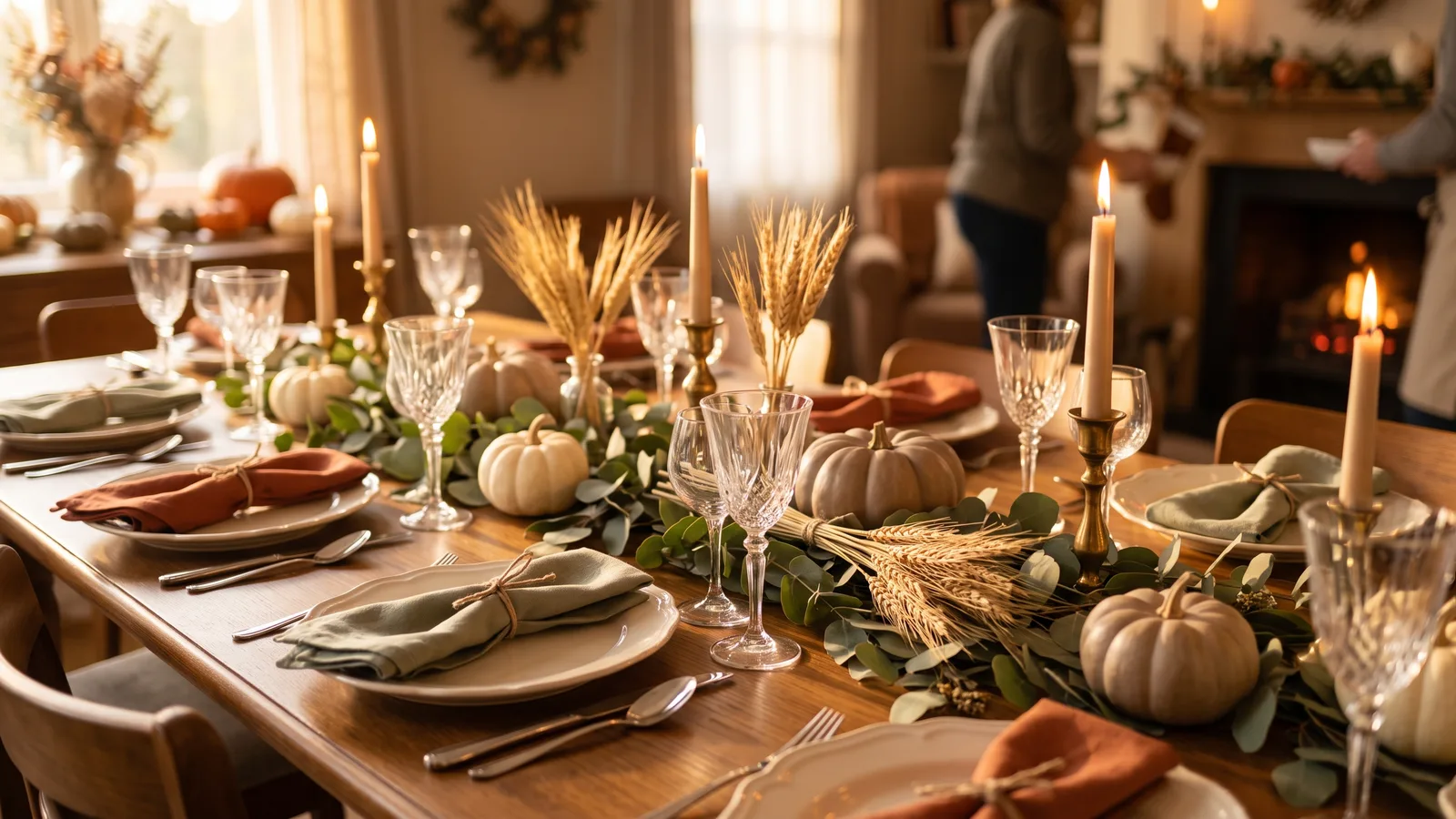
Why scalloped plates work so well for Thanksgiving
Thanksgiving tables carry a lot of visual weight. Between the turkey, the sides, the gravy boats and the extra leaves in the table, a plain round plate with a hard, straight rim can make the whole spread feel heavier than it needs to. A scalloped or ruffled-edge plate does something small but real: the wavy rim breaks up all those straight lines on the table without adding a single extra object to the setting. It’s the same plate you’d use anyway, just softened at the edge.
There’s also a practical reason scalloped dinnerware has become the easy choice for a holiday table specifically. It photographs well. A hard-edged white plate can look a little clinical in an overhead table shot, but a scalloped rim catches light and shadow along its curves, which is exactly the kind of texture that reads as “styled” rather than “set out.” If you’re taking even a few photos of the table before everyone sits down, the scallop is doing some of the work for you.
None of this requires going all-in on a themed table. A scalloped dinner plate under your usual napkins and glassware already shifts the whole table from “functional” to “considered.”
Three complete tablescape formulas
1. Cream-on-cream quiet luxury
This is the lowest-effort, highest-payoff version of a scalloped Thanksgiving table. Use cream or off-white scalloped stoneware plates as the base, layer a plain cream or oatmeal linen napkin on top, and keep the centerpiece equally tonal — a few cream fabric pumpkins or a runner in the same neutral family. Skip colored glassware and skip patterned napkins entirely. The scallop is the only texture doing any talking, and because everything else stays one shade, the table looks expensive without a single loud element.
The trick to keeping this from looking flat is layering height, not color: a taller candle or a small stack of the scalloped plates themselves as a centerpiece riser gives the eye somewhere to land.
2. Harvest with rust and sage
This formula leans into the season instead of away from it. Keep the plates themselves in a warm stone or cream scallop, then bring in color through the table linens and small decor — a rust-toned table runner, sage green napkins, and a cluster of neutral-toned fall pumpkins down the center of the table. The plate stays the quiet, structural piece; the color moves through fabric and accents instead of the dinnerware itself, so if you already own the plates, this is really a linens-and-centerpiece refresh.
A few mercury-glass pumpkin lights on a timer at each end of the table extend this look into the evening without anyone having to remember to turn them on.
3. Modern black-and-white scalloped
The least traditional of the three, and the one that reads most “editorial” in photos. Alternate black and white (or black and cream) scalloped plates down the table, or use white scalloped dinner plates with a black charger underneath. Keep the rest of the table restrained — plain white or black linen napkins, simple glassware, no floral centerpiece competing for attention. This formula works especially well for a smaller, adult-only Thanksgiving where you’re not trying to fit a craft-table energy into the room.
What Apartment Therapy’s 2026 tabletop trends piece says about this
This isn’t just a Fizz & Frillz observation. Apartment Therapy’s rundown of 2026 tabletop trends names scalloped and wave-edged dinnerware as one of the shapes actively replacing the plain, straight-rimmed white plate that’s dominated table settings for years. The piece frames it as part of a broader shift toward dinnerware with more personality and texture built into the shape itself, rather than relying only on pattern or color to do that work. Scalloped plates fit squarely into that shift — the shape carries the visual interest even in a completely neutral colorway, which is part of why the cream-on-cream formula above works as well as it does.
Color-variant comparison: cream, stone, white, black
Scalloped dinnerware usually comes in a handful of finishes, and they don’t behave the same way at a Thanksgiving table.
- Cream and stone are the most forgiving choices for a holiday meal specifically. They photograph warm rather than stark, and they hide the inevitable gravy drip or cranberry-sauce smear far better than a bright white plate does. If you’re only buying one set, this is the safest pick.
- White gives the most classic, gallery-clean look and pairs with literally any centerpiece color, but it shows sauce stains and scratches more readily, and it can photograph slightly cold or clinical under warm indoor lighting unless you’re deliberate with candles.
- Black is the most dramatic and the most forgiving of stains and spills of any color here, but it can visually shrink a table if you use it for every piece — it works best as an accent (a charger, or half the place settings) rather than the whole table.
If you’re buying new and want one set that does the most work across formulas one and two above, cream or stone is the practical answer. Black is the one to add later for the modern formula specifically.
How many pieces to buy for 8 guests
For a table of eight, plan on one dinner plate per guest at minimum — an 8-piece set, or two 4-piece sets if that’s how the scalloped stoneware you’re eyeing is sold. If you also want a matching salad or bread plate underneath, that’s a second set of 8, though this is genuinely optional; mixing a scalloped dinner plate with a plain smaller plate you already own (see below) works fine and costs nothing extra.
Worth buying one or two more than your guest count if the budget allows. Scalloped stoneware ships in individual pieces more often than boxed sets of the same finish, and a chipped piece on delivery day is common enough that a spare saves you from an odd plate at the table.
Mixing scalloped plates with plain ones you already own
You do not need a full matching set to use this trend well. The easiest version of this table is a scalloped dinner plate on top of a plain round charger or placemat you already have, or a scalloped salad plate stacked on a plain white dinner plate underneath it. The straight-edged piece grounds the setting, and the scalloped piece is the one detail that reads as new. This is also the cheapest way to test whether you like the look before committing to a full 8-piece set — buy four scalloped plates and mix them with plain plates you own, alternating around the table.
The honest downsides
Scalloped dinnerware is worth using for a holiday table, but it comes with a few real trade-offs worth knowing before the box arrives.
- The ruffle edge chips first. The wavy rim is the most delicate part of the plate — it’s thinner and more exposed than a straight edge, and it’s the point most likely to chip if a plate is stacked carelessly or knocked against another dish while washing up.
- Stacking height adds up. A scalloped rim doesn’t stack as flush as a straight-edged plate, so a set of eight can take up noticeably more cabinet space than the same number of plain plates. Worth checking you actually have the shelf clearance before buying a full set.
- Most of it is hand-wash only. A lot of decorated or sculpted scalloped stoneware isn’t rated for the dishwasher, and even pieces that are should be checked on the listing first — glaze finishes can fade or craze with repeated heat cycles. Plan on hand-washing the good set after the holiday meal.
- Sizes vary more than you’d expect between brands. “Dinner plate” on one scalloped set might run closer to a salad-plate diameter on another, since the wave in the rim eats into the usable flat surface. If you’re mixing a new scalloped set with plates you already own, check the actual diameter, not just the listing name.
None of these are reasons to skip the trend for a holiday table — they’re just the fine print worth knowing so nothing surprises you between now and Thanksgiving.
If you want the full rundown of the broader scalloped-decor trend beyond just plates — trays, cutting boards, frames and glassware — we cover all of it here, including which materials hold up and which are decorative-first.
Fizz & Frillz researches products rather than testing every one — we tell you what defines the trend and what to watch for, and we say plainly what we haven’t tried.